Tuesday, June 2, 2009
This sugar pill
But first, an introduction.
Placebo have been around for more than ten years now, and while they have flitted with the mainstream now and then they have been critically underrated. Generally, this is due to criticisms that the band have developed little since their 1996 inception, but I would argue it is precisely this familiarity, and variations on their own themes, that have led to their widespread popularity. Brian Molko's nasal snarl is one of the most distinctive voices in the industry, and their mix of edgy rock and po-faced introspection remains their selling point; unified by an aggressive energy across their catalogue. Their singles collection (2004's Once More With Feeling) proved they were efficient craftsmen of accessible rock, while remaining indebted to their gothic muse and while their albums are a string of consistently solid efforts, they have yet to create an unabashed masterpiece.
And so we come to Battle For The Sun. Which could conceivably be a minor rebirth for the band due to a combination of a three year absence since 2006's Meds and the first with new drummer Steve Forrest (after the departure of Steve Hewitt). David Bottrill (whose credits excitingly include Muse, Tool and Silverchair) lends production duties while the engineer from Meds, James Brown (don't even think it) returns. Touted as a darker, heavier affair it is also the band's first concept album (insert sound of inhaling shock). First speaking to NME Magazine, Brian Molko had this to say:
"I believe 'Battle' to be the first of our albums to tell a story over the course of its 52 minutes. Our previous releases were really only collections of songs and even though the songs are ordered according to the musical flow, I hope that if you listen hard enough to the words that some kind of discernible thematic unity will begin to emerge."
It sounds like an ambitious record and a welcome return from one of Britain's most unique bands.
But now it's time to see if that's really the case...
1. Kitty Litter
A few choppy chords and we're straight into it and lyrically, we're dealing with some customary themes, namely desire, in this case in the impressionistic object of Molko's affection, or should that be sexual lust?
Just before the finale the song breaks down into handclaps and drums with Moko intoning "I need a change/ I need a change of skin." Ironically, this track isn't it. Placebo have a history of great opening tracks, from their debut's scintilatting Come Home to Bulletproof Cupid on 2005's Sleeping With Ghosts, this however seems to break the run. It's Placebo by numbers.
2. Ashtray Heart
OK this is more like it, the song opens straight into a chorus, both in structure and in a mass of singers chanting something I can't quite decipher. We move to a quieter verse with a bouncing keyboard apreggiating in the background. There's a nice sing-a-long style pre-chorus before we return to that opening refrain. The rest of the track retains the same structure, save for a mild middle 8 section. It's not bad, but nothing special, perhaps an obvious single and thus it being so high in the tracklist.
3. Battle for the Sun
This track has already been heard by most, offered as a free download a few months back. Essentially it's very Placebo, which is to say it's reliably familiar in the same way the first two tracks are, but there's a rising ambition to it that sets it apart. A dissonant guitar line is built into a large rock workout, complete with a string arrangement to buff the main sound, the kind similar to a previous album cut like Song To Say Goodbye. It demonstrates new drummer Steve Forrest's new dimension to the band, giving them a bit of a kick in the more energetic moments and providing some interesting rhythms and sounds in the verses.
There's some ominous lyrics too, particularly the refrain of "Dream brother/my killer/my lover" as well as images of breaking bones and loaded guns. As the album's longest track it is given time needed to develop and grow, and surely will offer further rewards on repeated listens.
4. For What It's Worth
Chugging bass line and it's onward with the album, first verse "The end of the century/I said my goodbyes/for what it's worth I always aim to please/but I nearly died." Then into the biggish chorus, the second verse has some cool falsetto that sounds like backing female vocalists and some more strings sliding about. The second chorus curiously breaks down into what sounds like an elaborate ring tone or a video game twittering in the background, later there's even a spattering of horns. This contains some deceptively experimental moments in the course of its sub-three minutes. Very cool.
5. Devil in the Details
A blipping synth moves in a descending pattern against a low-end bass and some hissing hi-hat from the drums. The album's first curse is a ripper too, "He's a fucking pal of mine/that devil in the details." The chorus again seems to be fairly widescreen, that's not to say that Placebo haven't had a penchant for big sounds before; but there's a warmth and clarity to the kinds of choruses on this record so far that embrace space, as oppossed to previous records which favoured claustrophobia. A subtle difference, but interesting to note given this track's closing moments - they sound far bigger than three men.
6. Bright Lights
Speaking of oppositions... this starts with a bright, shiny keyboard part sparkling atop a wall of guitars. Reminds me of the first time I heard Starlight by Muse, a keening, yearning pop hook from a band who usually decried such casual approaches. So too here, with Molko comforting "No one can take you away from me" it's even a little reminiscent of Editors' brooding arena rock. It's three and a half minutes go by pretty quickly, finishing with a couplet of "A heart that hurts/Is a heart that works"
...can't believe we're at track seven already.
7. Speak in Tongues
Suppossedly Molko's favourite track on the album. An intriguing texture opens the song with a looped riff played by both upper-register piano and, I dunno, is that xylophone? It's a beautiful effect none the less. This pattern gives way to big chugging power chords which then give way to a lilting refrain with a breathy mass of singers. Again there's a lighter touch here that flys in the face of the jagged, rougher edges of previous records. At this point, i'd have to agree with Mr. Molko, the best track thus far.
8. The Never-ending Why
Not such a surprise then that it should be juxtaposed with a dark crunchy opening like this. Interestingly though it soon shifts to a brighter sound, again with a plinking part atop the melody (xylophone again I think). Around the two-minute mark there's some pounding emphasis on the chords that has some horns amongst the mix again. The last few tracks seem to be setting a new consistentcy in sound of a brighter Placebo, with a richer palette.
9. Julien
A dance backbeat and a throbbing bass changes the pace a little. To sidetrack for a moment, it should be mentioned that Placebo have a history of electronic dalliances on their records from. Here though it soon goes back to 'rock mode', a shame really it was starting to get interesting. Even more disappointing is that the violin part makes it sound like a retread of the title track.
At this point, i've heard little of the 'concept album' happening, i've been keeping an ear out but there don't seem to be any of the regular signifiers, characters or story-telling, of a concept album. Even the lyrics don't seem to have any recurring motifs. Perhaps there'll be a revelation to come.
...oh by the way all this digression from the track at hand is because it seems to be pretty derivative.
10. Happy You're Gone
Ah, do we have a ballad on our hands? Slower tempo, a marching snare drum and gently strummed guitar ....oh guess not, like Julien the interesting intro gives way to 'rock mode' once again, it's not bad, more a louder section that says 'we're at the chorus now.' It's a nice track otherwise, Molko's semi-whine has always suited itself to yearning, those strings rear their head again too.
11. Breathe Underwater
This sounds like old skool Placebo, i'm talking Without You I'm Nothing era here. Nothing more, nothing less. It's slightly faster in tempo and higher in aggression to what's come before it, an enjoyable addition to the tracklist.
12. Come Undone
A pretty restrained start offers another track to track juxtaposition but is yet again undercut soon after it sets its mood with a brash shift into alt-rock territory. It's not only a shame that this keeps happening on Battle For The Sun, but also a little confusing given the title tracks' structure lending it time and space to develop, something that these later tracks aren't afforded. Are we rushing to the finish line or something? either way, what starts promisingly shifts to a pretty average rock song.
13. Kings of Medicine
Luckily, the album finishes strongy with this, possibly Placebo's most interesting arrangement to date. All the elements that usually make up their sound are pushed to the background in favour of piano, acoustic guitars and a full-on horn arrangement. As its size expands so too does its symphonic appeal. In spite of the fretting, pessimistic lyrics "Don't leave me here to pass through time/without a map or roadsign" it's given an optimistic mood by the colourful clarity of the mix.
And there you have it...
Upon reflection, my first point has to be that is categorically, not a concept album, no matter what Molko says, this is not their American Idiot or even their Black Parade, in fact it's almost the opposite. It feels more like a collection of songs than ever before, there's even - dare i say it - some filler (in the shape of Julien and Come Undone). To be fair, this is after only one spin - perhaps the charms of the lesser tracks will reveal themselves upon further exposure. But as far as a unifying theme or story that ties the album together - no dice.
But In fact Battle For The Sun can only be called a disapointment when measured against the anticipation set up for it's unveiling. It's not a concept album - disappointing, new drummer Steven Forrest doesn't change the dynamic much - disappointing, there's no major development in their sound even with all those strings and horns - disappointing. There are however, other surprises to be had instead. Those horns and strings aren't a contrived inclusion into the group's sound but a rich addition - surprising; there's a brighter, spacier bent to some of these tracks - surprising; the ambitious desire for a concept record hasn't resulted in Placebo disappearing up their own backsides - very surprising.
So in summation, it's the kind of record that Placebo have always made, and while its lack of winning reinvention won't grab new fans, it won't really upset their current diehards either. It's what I pointed out was so good about Placebo to begin with, it's a comfortably familiar, reliably solid album and sometimes, that's all you need.
Monday, June 1, 2009
There's No Views Like Re-Views
Streetlight - Wolf Notes EP (Inertia, 2009)
There’s a nagging tendency for emerging Australian bands to ape
Though it would be unfair to single out
The EP is spearheaded by the muscular lead single, Watch The Empire Fall which offers vague prophetic imagery which ironically highlights the band’s own shortcomings “I feel the soul of this generation/I’m like a child growing up in a storm” against a backdrop of buzzing guitars and tub thumping drums.
The rest of Wolf Notes provides little variation to the formula. Red Sunrise could have been written by any band with a grasp of drama and a studio budget, while A Fast Way To Slow Down uses a back beat that ensnares the dance rock demographic.
Final cut
Anthemic and powerful are certainly within the band’s vernacular, but subtlety and dynamism seem yet to be defined in their book. From its edgy(ish) artwork right down to the group’s radio friendly track lengths Wolf Notes seems to furrow a deeply generic mindset; one that will ensure them airplay on commercial radio but little longevity.
To be fair, there’s nothing particularly bad about Streetlight but there’s nothing exciting or distinctive about them either. Wolf Notes may well be the sound of a group developing, but at this rate they are unlikely to become your new favourite band.
Have a listen for yourself:
Streetlight MySpace
...and decide for yourself if i'm being unfair.
If you're after something a bit more upbeat (ahhh, more puns!) check out my Beat magazine reveiw of Easy Star All-Stars' latest album here.
For those of you who don't know Easy Star All-Stars are a group who tackle classic albums in reggae-fied fashion. S'pretty cool.
Till a more fruitful excursion, I remain your humble writer.
Tuesday, May 19, 2009
It's not boring... It's consistent!
I had some rather ambitious ‘Most Anitcipated Albums of ‘09’ list cooked up but it seemed a little silly, as one of the albums of the year fell into my lap (courtesy of Beat magazine). While this is technically doubling up, I think it’s too great a record to receive too much attention.
(EDIT: So it turns out not only was my review published in Beat, but it was made CD Of The Week, which means it got up onto Beat's website! Hooray!)
Akron/Family - Set 'Em Wild, Set 'Em Free
(Dead Oceans, 2009)
The album cover for Akron/Family’s latest is a raggedy, tie-dyed rendition of the American flag. It’s a fitting image, as the band’s music is a skewed version of
It might, however, come as a shock to anyone who familiarised themselves with Akron/Family through 2007’s Love Is Simple.
Set Em Wild, Set ‘Em Free could be the work of an entirely new band and it marks a turning point in Akron/Family’s career, displaying not only a new liberation and innovation but, it is also an album of ‘firsts’. Their first as a three-piece after the departure of founding member Ryan Vanderhoof, their first for a new label (Dead Oceans) and their first self-produced record.
They are not alone however, accompanied by a small buffet of horns, woodwind and strings that not only complements their core arrangements but enabling the grander visions on offer here.
Here is a band that treats songs like ideas, not just another name to put on the set list - and it shows. It’s almost impossible to predict where the album is headed next, as it splays its way from one musical spectrum to the next offering a bevy of delightful surprises (as well as surprising delights) along the way.
The album opens with the Afrobeat influenced Everyone Is Guilty and River . Two cuts that are proof that Vampire Weekend aren’t the only ones who have given Paul Simon’s
The territory suddenly shifts with the experimental drones of Creatures and then a harmonica on the opening of The Alps & Their Orange Evergreen introduces a more traditional folk/alt-country sound; a sound that follows for the (semi)title track Set ‘Em Free, Pt 1.
Then there’s the rollicking epic that is Gravelly Mountains of the Moon, beginning with docile flutes, then a lurching horn ensemble, before exploding into a full blown psych-rock wig out. Following the lush Many Ghosts comes the burst of aggressive static that is MBF. The elegiac They Will Appear winds the record down to the finish, followed by the warm paean of Sun Will Shine transforming into a drunken bluster of horns.
The final track Last Year finishes with a chorus framed against a simple piano pattern, repeatedly singing “Last year was a hard year for such a long time/ This year is gonna be ours”
If Set ‘Em Wild, Set ‘Em Free reaches enough ears yearning for new music, then 2009 is most certainly theirs.
Check it out:
Stream Everyone Is Guilty from the band’s MySpace
P.S. Seems I wasn’t the only writer who noticed the whole album artwork analogy, it either shows that great minds think alike – or a complete lack of ideas amongst the music press…
Here’s some examples:
Manic Street Preachers - Journal For Plauge Lovers (Columbia/Sony, 2009)
Poor old Manic Street Preachers, they just can’t seem to escape the spectre of Richey Edwards.
An original founding member, he was the band’s key songwriter and controversy magnet until he famously up and disappeared in February 1995, now missing presumed dead. It’s a tragic story, but the remaining members – James Dean Bradfield, Nicky Wire and Sean Moore - overcame adversity and delivered one of rock’s triumphant comebacks in the form of 1996’ Everything Must Go. They then rode a series of patchy but doggedly determined albums until the career slump of Lifeblood. It risked finishing the group off until they pulled a stunning turn-around with the commercially and critically viable Send Away The Tigers.
The key point being that by this time it seemed everyone – including the band themselves – had respectfully laid Edwards’ legacy to rest. But here they go picking at old scabs and reminding everyone again.
Intended as a tribute, their ninth studio album amalgamates lyrics from Richey Edwards’ old journals, Wire, Bradfield and
Tribute or no, it’s a regressive move. Send Away The Tigers introduced the Manics to a new generation of (younger) fans; even NME magazine – the mouthpiece of the fickle youth – crowning them with the ‘Godlike Geniuses’ award
It’s a gamble then to assume that their newer fans will follow them on their journey back to their political art roots. It’s as if they want to show the new bloods their tragic history.
It’ll surely be a thrill for long term Manics fans. Journal For Plague Lovers finds them returning to the rougher edges of their earlier work, complete with raw production from Steve Albini and Dave Eringa, complete with the same acerbic poet laureate vernacular and sampled philosophical recordings of their earlier records. It’s as if Journal For Plauge Lovers follows an imaginary timeline where everything after 1994’s The Holy Bible never happened. Which implies an awful bit of wish fulfillment – that Richey Edwards never disappeared. Aesthetically speaking, not much has changed but it’s strange that MSP should choose this point, when their stock hasn’t been higher than their mid nineties glory days, to choose to make a record like this.
The whole affair feels like a step backwards, after all this is what Send Away The Tigers did so well, blanketing it’s barbed social commentary in enjoyable guitar anthems laden with just enough hooks to generate a sing-a-long. It’s hard to imagine anyone singing along to wordy refrains like, “Oh the joy/Me and Stephen Hawking we laugh/We missed the sex revolution/When we failed the physical” (Me And Stephen Hawking).
In the end that’s very Manic Street Preachers. Why coast on the success with a Send Away The Tigers Part II when you can flick a big V sign at everyone and make it hard on yourselves?
Could it be the Manics were simply out of ideas? Surely they have too much love and respect for their fallen comrade to plunder his journals for the purposes of shortening their record contract. No, perhaps this is the final exorcism they need before they can finally move on.
Journal For Plague Lovers isn’t a bad record, it isn’t as bloated or creatively lean as 2004’s Lifeblood, but it’s certainly an act of willful rebellion, which is probably a fitting tribute to their old figurehead. After all here’s a band whose opening mission statement was an album called Generation Terrorists, and in that regard they’re still kicking and screaming twenty years after their birth.
Check it out:
Jackie Collins Existential Question Time from the band’s website
A brief taste of Peeled Apples on the band’s MySpace
Hopefully that’s inspired you to check out some great new music.
Also, be sure to check out my mate Sean’s brand spanking new blog: Sonic Sandwiches
Also avert your browsers back to NobodyMove! as it finally lurches back to life
Tuesday, May 12, 2009
Treat 'em mean, keep 'em keen
So what to do, what to do.
Well I thought i'd originally just nick some of my reviews from Beat magazine that hadn't been published yet, but I'm feeling generous (that and I might be really creatively bankrupt somewhere down the line) - so instead I thought i'd just chat about some recent albums i'm really digging.
Ah! I just thought of a theme, consider the link between these two to be 'Wildly Unpopular Genres That I'm Trying to Defend (Again)' - yeah, that's catchy...
Pure Reason Revolution - Amor Vincit Omnia (Superball, 2009)
Firstly, the facts. Pure Reason Revolution are an English progressive rock band, only they're not your usual run-of-the-mill prog rock band. Well at least they're not anymore...
The band's debut, the excellent The Dark Third of 2006, was a refreshing, powerfully confident work and an assured opening statement from a group that made an oft criticised genre fresh and exciting again. Though heavily indebted to Pink Floyd, it's centrepiece Bright Ambassadors Of Morning named after a lyric from Floyd's track Echoes, it nevertheless managed to balance it's influences with a thrilling concoction of heavy rock, layered harmonies and the occasional flirtation into electronica.
Shortly after the Victorious Cupid E.P. in 2007 however, the band slid back into obscurity, the departure of two band members didn't help matters and it looked, for a while, like that it was the start and end of a great band. But thankfully posts on their MySpace site began small waves, releasing some unreleased material and hints of a complete change in sound. The remaining members Jon Courtney, Chloe Alpner, Paul Glover & Jamie Wilcox soldiered on.
Jump to today and we have Amor Vincit Omnia which signals the stylistic shift in the Pure Reason Revolution sound. Opening track Les Mahleurs signals the new intentions from the outset, bathed in staggered, bassy synths and a pure dancefloor backbeat, it could just as easily be something by The Presets or Cut Copy. It's quite the shock to any fan, but it soon becomes clear that the band haven't ditched all the elements that made them so great. Their boy/girl dual vocals (courtesy of Courtney & Alpner) remain essential, opening the album in fact, as well as their cylcic lyrical patterns that loop and dance on top of each other. The passionate melodies and singing lend the record a human quality in the face of the newly attached army of synths, keyboards and sequencers. This does result in a distinct lack of crunchy guitars and virtuosic drums, which isn't to say the record doesn't rock. One spin of Victorious Cupid or Deus Ex Machina dispell fears that the band have gone completley electronic. The focus instead has shifted into forging ahead with a modern integration of electronic music with the spirit of progressive rock.
Whereas the more traditionally influenced sounds of their debut will be missed, that void is much more likely to be filled than the strange new genre that the band have invented here.
No, Pure Reason Revolution instead have charted a course for an entirely new constellation that seamlessly combines electronica with prog rock affectations. There may not be long-winded guitar and keyboard solos or a fictional narrative running through Amor Vincit Omnia, but they sure as hell have managed to maintain the genre's character.
Witness the two track, three-part evolution of Keep Me Sane/Insane-Apogee-Requiem For Lovers which has all the lyrical pretension and musical progression of classic prog, but instead distilled into a focussed six minute mini-opus.
While the album's first half settles the listener into the brave new results of the group's experiments, it is the tail-end of the album that contains the biggest rewards. Bloodless begins a charming pallete of plink-plonk synths and sequenced horn parts before shiftinng into a melancholic hymn.Disconnect takes that most obvious electronic music staple, the vocoder, and uses it as a catalyst for an upbeat electro-ballad while The Gloaming is a ruminative epic that floats and builds into a trance.
The closing (semi) title track AVO is, appropriately, a show-stopper. Despite being one of the shortest tracks on the album, it manages to achieve an epic drama usually reserved for long-winded compositions. Thanks in part to its marked break halfway in, where the music halts in favour for a slowly rising three-part incantation of the album's latin title, which repeats as a meditative chant while the music rises into a powerful coda. That latin translates as "Love Conquers All" a theme that courses its way through the album, especially lyrically.
Amor Vincit Omnia is a triumphant return as well as a reimagination of Pure Reason Revolution and they should be commended for their invention alone. The three year gap since their debut could have resulted in a case of 'too little, too late' but instead they have risen against the odds to craft something strikingly new without sacrificing the components that made them so great in the first place.
Check It Out:
-Les Mahleurs & AVO can be streamed from the band's MySpace
-Plus here's a live performance of Deus Ex Machina
Mastodon - Crack The Skye (Reprise, 2009)
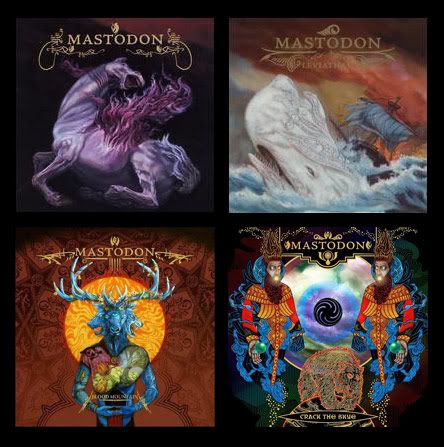
Mastodon always managed to stay just off the edge of my radar. Though I was intrigued by (of all things) their artwork and some of their alt-metal riffage, there was always something that put me off about their brutal approach, what seemed a tipping of the scales to the blunter end of metal fans. All that has happily changed with Crack The Skye.
The band's fourth album, it's a contradiction in terms in that it's a natural progression of the band's dense oft psychedelic metal but also a record whose softer edges may polarise long-term fans. It's precisely this calmer approach that has opened up the band's powerful sound to the tools of melody and harmony, the opening salvo of Oblivion and Divinations demonstrate a newfound grasp of harmony that makes for spacey (as opposed to fast, techincal) guitar solos and memorable choruses wihtout compromising the band's dense, heavy guitars.
Mastodon have always been the metal band's metal band, held in high esteem amongst their peers, their albums featuring collaboration with the likes of Josh Homme (Queens of the Stone Age), Cedric Bixler-Zavala (The Mars Volta) and Scott Kelly (Neurosis) who contributes vocals again here, on the title track.
Crack The Skye sees Mastodon in a freer, contemplative mood fulling giving in to their ambitions and musical explorations. Reuslting in them drifting further out into their heady, complex compositions. Not since Tool has a band dazzled so with its amazing song structures. At once invigorating the powerful rhtyhms and riffs that support them as well as justifying the extensive track lengths such as The Czar which shifts and mutates through four distinct sections, and winding closing track The Last Baron - both hitting the ten minute plus mark.
Supporting these vast excursions is the album's narrative, yes that's right Crack The Skye is a concept album. This will come as no surprise to those who have followed Mastodon thus far, they've covered an album about fire and flaming horses (Remission), an album based on Moby Dick and a trek up a mountain side battling against both the elements and fantastical beasts in the form of Blood Mountain.
So what is Crack The Sye's narrative then? well, *deep breath* it follows the story of a paraplegic who astral projects himself into a wormhole that takes him back to Tsarist Russia, where a cult of sorcerer-types discover his lost soul and put it into the body of Rasputin. Rasuptin then attempts to usurp the Czar but is murdered releasing both his and the protagonist's soul into the void, Rasputin then must lead the wandering astral projection back home but then they're confronted by the Devil who attempts to steal them, making for an epic final battle that could the harm both souls.
....or something like that.
To be honest it's not so much the story that is important, you hardly get the narrative from the lyrics anyway but as with most concept albums, it is a thematic thread that ties the complex explorations together. Besides, to follow the album in a strict story would take away from the mystery and psychedelic fug that the band manage to conjure anyway. Their power and rhythm becomes meditative and as each track burns and fades into each other it's like tectonic plates shifting, there's a drastic change in geography but it's still the same planet.
Massaging this combination of heavy metal aesthetics with moody, melodic ambience is producer Brendan O'Brien who has produced and mixed a number of cross-over acts, chiefly Incubus and Audioslave, which aids in reaching the kind of audience Mastodon is stretching out to.
Those worried that O'Brien's mainstream success would neuteur Mastodon's immense sound can rest easy, the whipcrack drums and complex guitar arrangements are cranked to the fore of the mix without getting in the way of the vocals.
Actually that's a key point to Crack The Skye, it's vocals are as important a texture now as the rest of the band unit. With lead vocals shared between the Ozzy Osbourne-ish yowl of Brett Hinds, bassist Troy Sanders and for the first time, drummer Brann Dailor. As well as swapping vocal duties, there are a number of subtle vocal harmonies that are peppered throughout the album, particularly on the psychedelic Quintessence and the mid sections of The Czar.
Crack The Skye might be an awful lot to take in for those not trained in prog rock escapades, high concept metal, stoner rock or anything in-between. But it's precisely the densely-layered textures and evolutions that emerge after several listens that make it such a rewarding and mysterious journey. This thinking man's metal may lose them some stubborn fans who refuse to let go of the Metallica chug that they used to make, but for the rest of us - we are openly welcomed to the strange new world of Mastodon.
Check it out:
-The suitably trippy official website of the album Crack The Skye
-Oblivion and The Czar on YouTube.
Whew - good old word count bug kicked in again.
Well, in the immortal words of Farmer Hoggett:
"That'll do pig, that'll do"
Tuesday, May 5, 2009
Lights, Camera... Audio?
Shazam! I would like to say that the idea for this post was my own but all due credit must go to my friend and fellow Ugly, Sam. It's all about movies - some bad, some good - in which the sound is superior to the visuals. There's a very simple test for this, would you rather listen to the soundtrack - generally in half the time - or watch the movie?
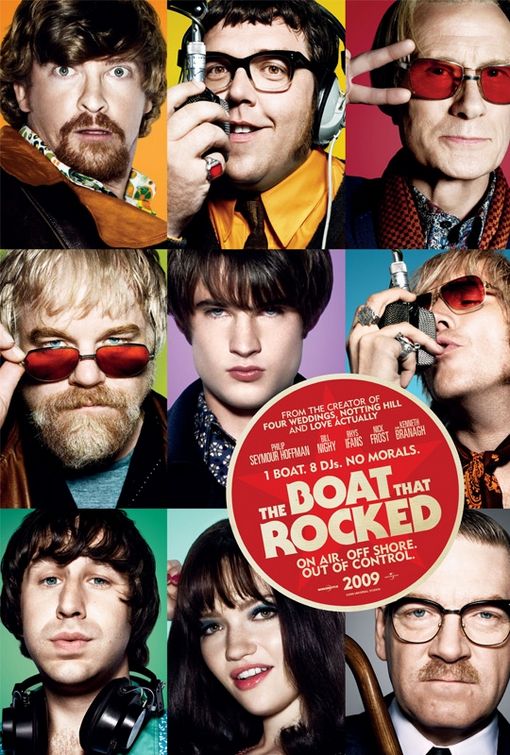
The film that started the discussion that led to this list I believe. Also a great example in that the film is not especially bad (though some will strongly disagree with me), but when you've got a two disc compilation of sure-fire classics as this, the film simply can't compete. It's only fair, after all, the film is all about peoples' passion for music and once again it shows writer/director Richard Curtis' great (if slightly schmaltzy) music taste.
Highlights:
The Turtles - Elenore
Procol Harum - Whiter Shade Of Pale
The Easybeats - Friday On My Mind
I never really got Garden State, for a directorial debut (by star Zach Braff) it's fairly impressive. Overall though, despite starting well, it's ideas just didn't seem to gel for me. Not so the soundtrack, beginning with Coldplay's Don't Panic it goes from strength to strength with a consistent mood and tone that gravitates around acoustic instropection. From Indie darlings The Shins to some classics (Nick Drake, Simon & Garfunkl) and winding things down with an excellent cover of The Postal Service's Such Great Heights by Iron & Wine. And as much as I love Natalie Portman, it's hard to go past Sam Beam's dulcet tones.
Highlights:
The Shins - New Slang
Nick Drake - One Of These Things First
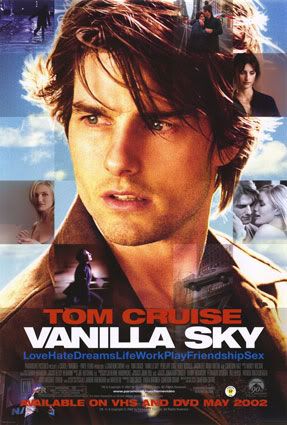
Cameron Crowe is another director with impeccable musical taste, his years spent as a teenager submitting to Rolling Stone magazine certainly helped. As such his soundtracks are usually of a very high quality. Whether it was his youth captured in Almost Famous, almost single handedly turning Elton John's Tiny Dancer into a revival hit; or his earlier film Singles with it's tie-in with the Seattle grunge movement feautring cornerstone acts such as Alice In Chains, Pearl Jam & Soundgarden. But Vanilla Sky, his misunderstood Tom Cruise fronted remake of 2001, trumps them both. Featuring the biggest and most respected names in music (Radiohead, R.E.M., Dylan) alongside some personal choices of Crowe's (Red House Painters, Jeff Buckley). All this and he even managed to convince an ex-Beatle to record the title track as well as including an unreleased (at the time) Sigur Ros track in the ending sequence.
Highlights:
Radiohead - Everything In Its Right Place
Peter Gabriel - Solsbury Hill
Julianna Gianni (Cameron Diaz) - I Fall Apart
Speaking of The Beatles...
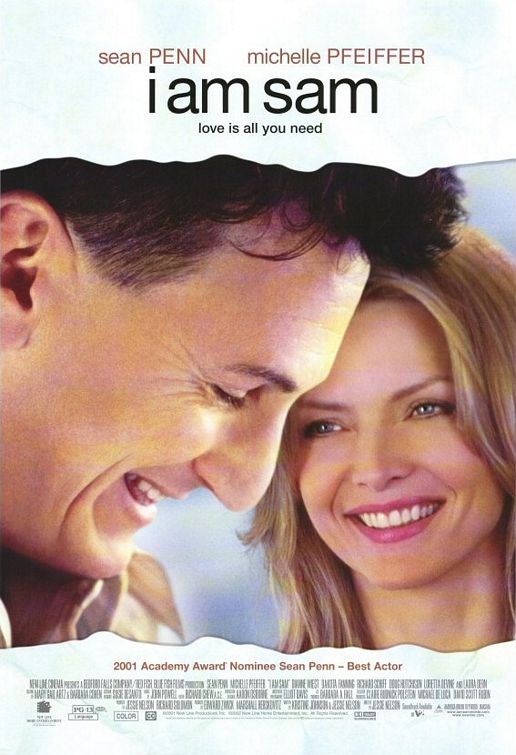
I Am Sam is all about a mentally handicapped father and his battle to keep his daughter, the link being he's obsessed with the fab four and the film is peppered with references. Or was it all an excuse for this cleverly marketed and executed soundtrack?
Even though The Beatles have been covered to death and even though there'll never better the originals, there's still some good takes on here and still better than the highly manipulative film.
Highlights:
The Vines - I'm Only Sleeping
Ben Folds - Golden Slumbers
Eddie Vedder - You've Got To Hide Your Love Away
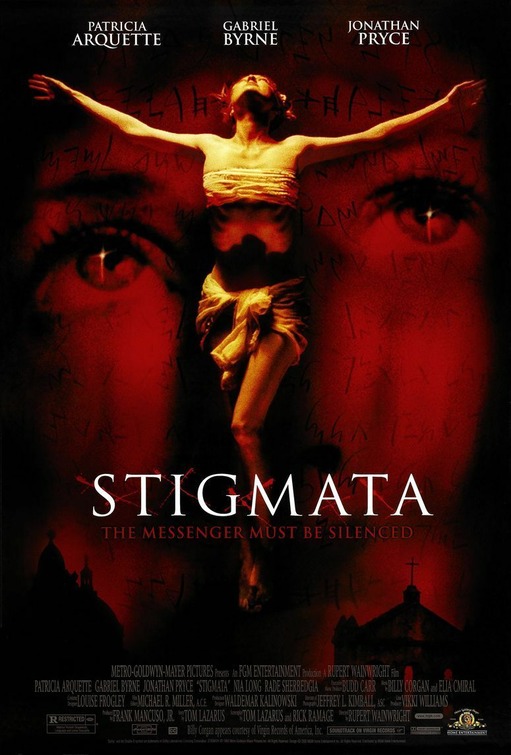
The movie was a rubbishy thriller shot in the style of 90's slasher flicks with quasi-religious overtones. The soundtrack is automatically superior to the film in every way as it contains one of the greatest songs ever written: the remix of Björk's All Is Full Of Love - that eventually trumped her original album version by its inclusion on her Greatest Hits set. That epic aside, the soundtrack is still noteworthy with a selection of moody numbers by the likes of Massive Attack, Afro Celt Sound System and even David Bowie. The latter half of the CD is dedicated to the film's evocative score composed by none other than virtuoso rock pianist Mike Garson & Billy Corgan (back when Smashing Pumpkins weren't synonomous with 'desperate attempt to reclaim formy glory').
Highlights:
Björk - All Is Full Of Love
Natalie Imbruglia - Identify
Mike Garson & Billy Corgan - 1,000,000 Voices
Just slightly predating Slumdog Millionaire's popularisation of Bollywood came Wes Anderson's quirky comedy (now that's a tautology) and it's compilation soundtrack of Bollywood pieces, predominantly from Indian auteur Satyajit Ray. Included also is Peter Sarstedt's Where Do You Go To (My Lovely), the key song from Hotel Chevalier, the short that precedes the film proper. It's meditative acoustic guitar chords and Sarstedt's swooping, circular melody seem to fit snugly alongside the majority of masala on offer here. Also included are some curios from The Kinks, The Rolling Stones and even some Debussey.
Highlights:
Peter Sarstedt - Where Do You Go To (My Lovely)
Shankar Jaikishan - Bombay Talkie
Vilayat Khan - Arrival In Benaras (from The Guru)
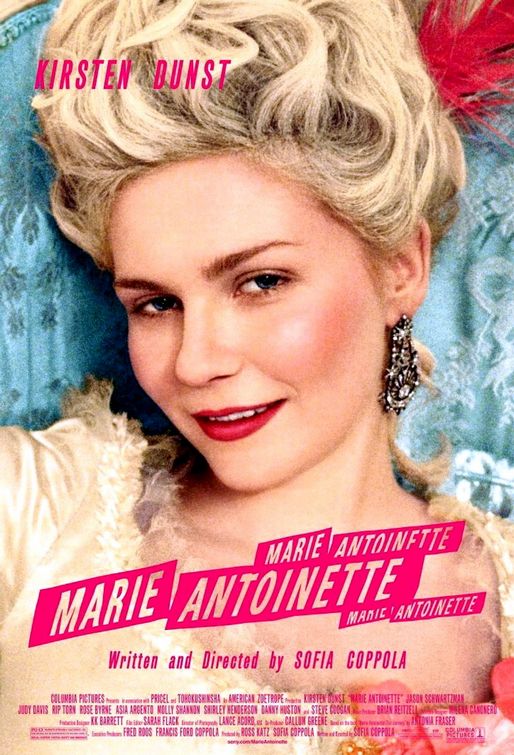
Sofia Coppola had already set a trend for fashionable as well as enjoyable soundtracks with her previous films thanks to her musical buddies Air and Kevin Shields (My Bloody Valentine), for The Virgin Suicides and Lost in Translation respectively. But for her rock n roll portrait of the French monarch, Coppola went all-out with a two disc set. Though the film was criticised as a matter of style over substance, it was hard to fault the smorgasboard on offer in the audio department. It takes in 80's cult acts such as Bow Wow Wow, Siouxsie Sioux, The Cure and New Order as well as a healthy does of modern groups such as The Strokes, Aphex Twin and a return appearance from Air. When it came to the soundtrack Marie Antoinette let Coppola have her cake and eat it too.
Highlights:
Siouxsie & The Banshees - Hong Kong Garden
The Strokes - What Ever Happened?
Bow Wow Wow - I Want Candy

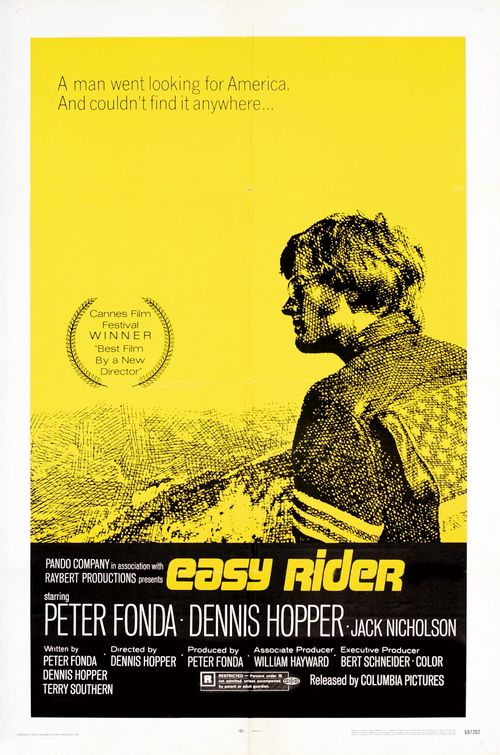
Bit of a controversial one, this. It's hard to argue against the importance of Easy Rider in ushering in a new wave of American cinema, nor it's influence - mirrored in the soundtrack. For better or worse, without Easy Rider we wouldn't have all those albums entiteld "music from and inspired by" or "music from the motion picture."It was one of the first to promote a compilation of contemporary tunes instead of an accompanying score, it's rock and garage sounds perfectly complemented the free spirit and controversy of the film too. It's soundtrack has become a part of popular culture, few can disassociate Steppenwolf's Born To Be Wild without images of revving Harleys hitting the wide open desert road.
Highlights:
Steppenwolf - Born To Be Wild
The Band - The Weight
Roger McGuinn- Ballad of Easy Rider
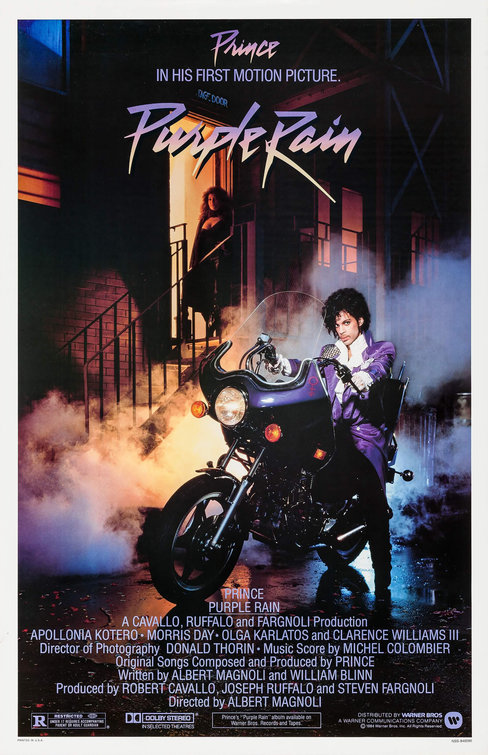
Highlights:
Prince & The Revolution - Let's Go Crazy
Prince & The Revoltuion - When Doves Cry
Prince & The Revolution - Purple Rain
Highlights:
Jamiroquai - Deeper Underground
Rage Against The Machine - No Shelter
Ben Folds Five - Air
Foo Fighters - A320
Silverchair - Untitled
And there you have it.
Got any suggestions or grievances? Feel free to comment below